Writers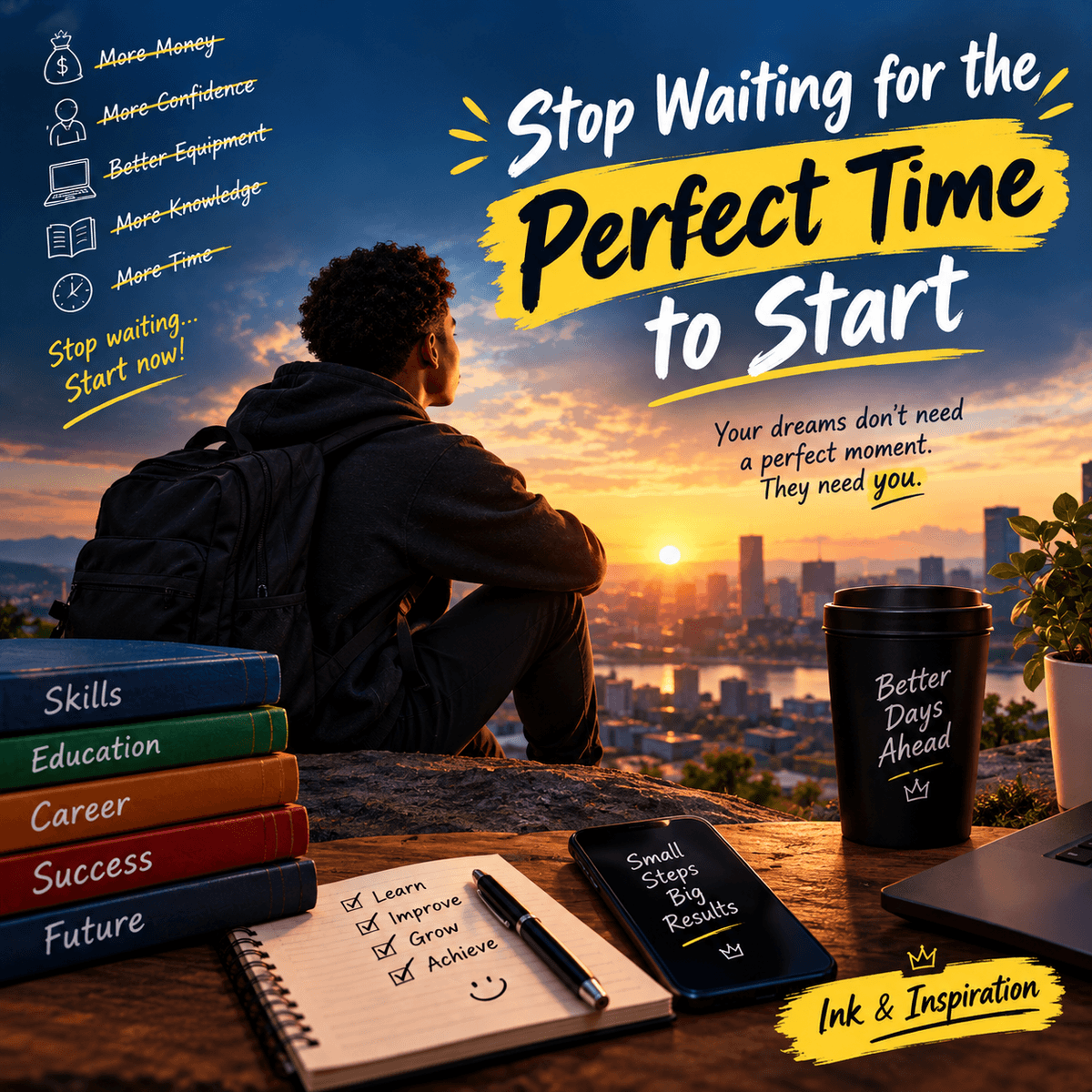
Many people have dreams they genuinely care about, yet they keep postponing the first step. They tell themselves they will begin when they have more money, more confidence, better equipment, more knowledge, or more time.
The problem is that the perfect moment rarely arrives.
There will almost always be something missing. If you wait until everything is perfect before starting, you may spend years preparing for a journey that could have already begun.
Starting with what you have does not mean you should ignore preparation. It means understanding that preparation and action can happen at the same time.
The First Step Is Often the Hardest
Beginning something new can be uncomfortable.
You may worry that people will laugh at you. You may compare yourself with people who have been doing the same thing for years. You may think your first attempt will not be good enough.
Those feelings are normal.
Nobody starts as an expert. A writer's first article may not be their best. A student's first attempt at learning a difficult subject may contain mistakes. Someone learning video editing may create several imperfect projects before understanding what makes an edit look professional.
The important thing is to begin.
You cannot improve something you never attempt.
Do Not Let Comparison Stop You
Social media makes comparison especially easy. You can open your phone and immediately see people displaying achievements, expensive possessions, businesses, academic successes, creative projects, and exciting experiences.
It can make your own progress feel small.
But you are often comparing your beginning with someone else's middle.
You may not see the years of practice, failed attempts, sacrifices, lessons, or support behind another person's current achievement.
Instead of asking, "Why am I not where they are?" ask, "What can I learn from where I am now?"
Your journey does not have to look exactly like someone else's.
Use What Is Available to You
Sometimes people believe they need expensive tools before they can begin developing themselves.
In reality, many useful skills can be developed with resources that are already available.
A phone can be used to research a subject, read educational material, practice a language, learn a digital skill, organize ideas, write articles, or study for an examination.
A notebook can become a place for planning.
A library can provide knowledge.
Free educational resources can provide lessons.
What matters is learning to make productive use of available opportunities.
You may not have everything you want, but you can still ask yourself what you can do with what you currently have.
Small Beginnings Matter
A big goal can feel overwhelming when you look at everything that must eventually be accomplished.
Instead of focusing on the entire mountain, focus on the next step.
If you want to write a book, begin with one page.
If you want to learn a language, begin with a few words.
If you want to improve academically, begin with one topic.
If you want to develop a career skill, begin with one lesson.
If you want to build a portfolio, create your first project.
Small actions may appear insignificant individually, but repeated actions can create substantial progress over time.
Failure Is Part of Starting
One reason people delay starting is the fear of failure.
But failure can provide information.
When something does not work, you have an opportunity to examine what happened. Perhaps your method needs improvement. Perhaps you need more practice. Perhaps you misunderstood the task. Perhaps you need advice from someone with more experience.
A failed attempt does not automatically mean the goal is impossible.
Sometimes it simply means the current approach needs to change.
The person who never starts avoids failure, but they also avoid the lessons and experiences that come from trying.
Give Yourself Permission to Be a Beginner
You do not have to be excellent on your first attempt.
Give yourself permission to learn.
Your early work may be imperfect. Your first presentation may make you nervous. Your first article may need editing. Your first project may contain mistakes.
That is part of becoming better.
Instead of demanding perfection from yourself immediately, focus on improvement.
Ask yourself:
What did I learn today?
What can I do better tomorrow?
Those questions can turn mistakes into lessons and lessons into progress.
Your Future Depends on Today's Actions
The future may seem distant, but it is influenced by what you repeatedly do today.
Every skill you develop becomes part of your preparation. Every useful book you read adds to your knowledge. Every meaningful project gives you experience. Every mistake you learn from makes you more prepared for the next opportunity.
You do not need to know exactly how everything will turn out.
You only need to identify a useful next step and take it.
Final Thoughts
There may never be a day when you have unlimited time, unlimited money, unlimited confidence, and perfect conditions.
Do not allow the absence of perfection to become an excuse for permanent delay.
Start small.
Start imperfectly.
Start with what you have.
Then learn, adjust, improve, and continue.
The first step may not change your entire life immediately, but it can change the direction in which your life is moving.
You do not need the perfect time to begin. Sometimes, the best time to start is simply when you decide to stop waiting.
— Ink & Inspiration