Writers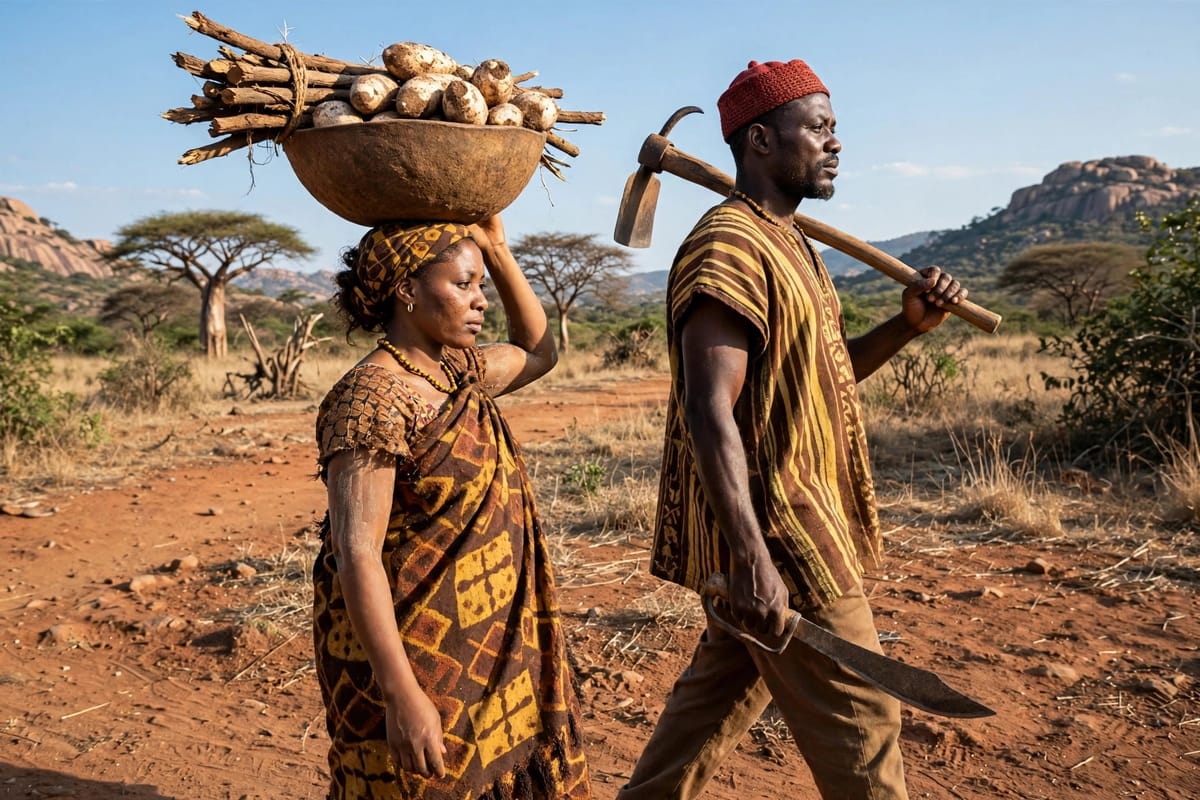
The Gbagyi people are one of the largest and most important native ethnic groups in central Nigeria. Many outsiders call them "Gwari," but they call themselves Gbagyi. Their traditional homeland covers what is now Abuja (the Federal Capital Territory), plus parts of Niger, Kaduna, Nasarawa, and Kogi States. They are considered the original people of Nigeria's Middle Belt region.
**Where they came from**
Gbagyi oral history and language studies show they belong to the Kwa/Benue-Congo language family, and their ancestors migrated across the West African savanna long ago. By around the 11th and 12th centuries, they had built strong communities across central Nigeria, in areas like Minna, Paiko, Abuja, Kuta, Birnin Gwari, and Karu.
When slave raiders and jihadist armies threatened the region in the 18th and 19th centuries, the Gbagyi used the landscape to protect themselves. They built settlements on top of hills, rocky outcrops, and in thick forests, which helped them keep their independence, their own way of governing themselves, and their traditional beliefs.
**How they organized society**
Unlike some neighboring groups that had powerful kings, the Gbagyi ran their communities in a more cooperative, democratic way. Each community had a traditional ruler called an Esu, but the Esu didn't rule alone; he worked together with a council of elders and spiritual leaders. Family life was built around extended family groups and age-based associations, which handled things like farming, defense, and community celebrations.
**Culture and daily life**
One of the most recognizable things about Gbagyi culture is how they carry heavy loads: on the shoulder instead of the head. This comes from a belief that the head is sacred, the home of a person's spirit and intelligence, so it shouldn't be weighed down with burdens. Because of this, women traditionally carry firewood, farm goods, and water on their shoulders instead of balancing them on their heads.
Farming is central to Gbagyi identity. In fact, some say their name relates to a word meaning "people of the soil." They have long grown crops like yam, sorghum, millet, maize, and sesame, and are widely respected as hardworking, honest farmers.
Gbagyi women are also famous for pottery. Using coiling techniques and natural glazes made from plants, they make water pots, cooking vessels, and ceremonial jars. The most famous Gbagyi potter, Ladi Kwali, became internationally known for her artistry and was even honored on Nigeria's old 20 Naira banknote.
**Colonial times and the founding of Abuja**
When the British ruled Nigeria, Gbagyi communities gradually left their hilltop settlements and moved down to the plains, helping build towns like Minna, which became a major railway hub, and Kaduna.
Then, in 1976, the Nigerian government chose Gbagyi land as the site for the country's new capital city, Abuja. This meant the Gbagyi people gave up huge amounts of ancestral land, farms, and sacred sites for national development. This history is still part of ongoing conversations today about land rights, fair compensation, and protecting Gbagyi culture within the capital region.
**Beliefs**
Traditionally, the Gbagyi followed their own monotheistic religion, worshipping a supreme god called Shekwoi, believed to be the creator of heaven and earth. They also honored ancestors and nature spirits, who were seen as playing a role in daily life, harvests, and moral guidance. Over time, through contact with missionaries and neighboring groups, most Gbagyi people today practice either Christianity or Islam, though they still take pride in their traditional names, customs, and heritage.
**Today**
The Gbagyi remain an influential group in central Nigeria, both economically and politically. They're known for being welcoming and peaceful, and they continue to celebrate their musical traditions, using instruments like the Gbagyi horn and the Kakaki. Their long history of farming and craftsmanship, especially pottery, remains an important part of Nigeria's cultural and artistic heritage.