Writers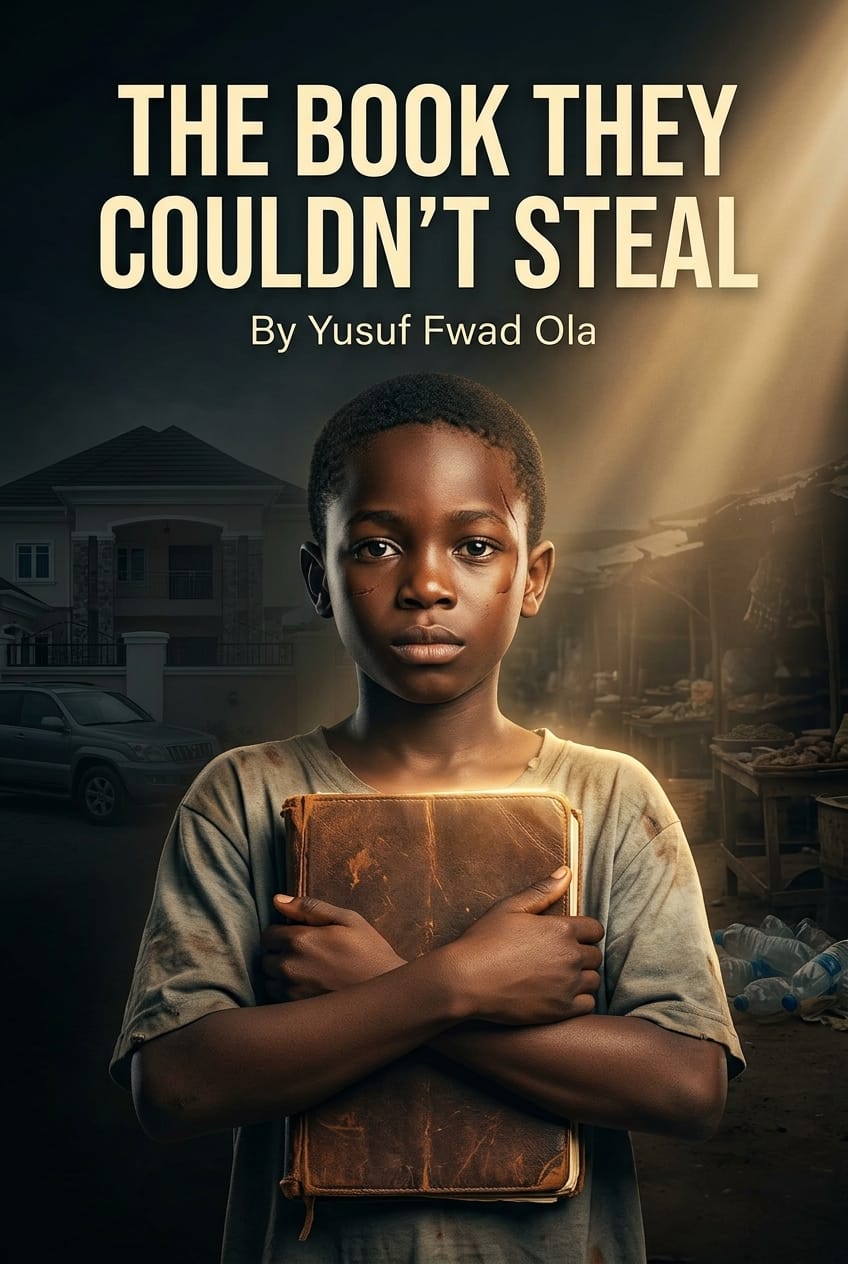
There lived a boy named Suleiman, he was born into comfort. His father, Alhaji Bello, owned a transport business that ran buses between Ilorin and almost every major city in Nigeria. The name "Bello Motors" was painted in bold letters on more than forty vehicles, and people said the name with respect whenever it came up in conversation. Suleiman grew up in a large compound with three buildings, two cars parked outside, and a driver who dropped him at his private school every single morning without fail.
He never knew what it meant to want something and not get it. When his classmates admired a new toy, Suleiman already had three versions of it at home. When school fees were due, he watched other children whisper nervously to their teachers while he handed his own envelope over without a second thought. He didn't understand yet how rare that kind of safety was. To him, it was normal. It was simply life.
His father was a busy man, but never too busy for Suleiman. Every night, no matter how tired he looked from a day of managing drivers, negotiating fuel prices, and settling disputes at the park, Alhaji Bello would sit with his son for at least thirty minutes. Sometimes they talked about school. Sometimes his father told him stories about how he built the business from a single rickety bus he bought at twenty eight years old. And almost every night, before Suleiman went to bed, his father would open a thick, leather-covered notebook and write something in it quietly and carefully, as if the words mattered more than anything else he did all day.
"What are you writing, Dad?" Suleiman asked him once, when he was about seven years.
His father smiled, the kind of smile that held something deeper than the question deserved. "Notes," he said. "For you. For later. When you're old enough to need them."
Suleiman didn't think much of it then. He was seven. He was more interested in the football match his father had promised to take him to that weekend than in a notebook full of adult words he couldn't yet understand.
Two years later, everything changed in a single afternoon. It was a Thursday. Suleiman remembers the day clearly, even now, because it started so ordinarily. He came back from school, ate his lunch, and was doing his homework at the dining table when he heard his mother's voice — not loud, not screaming, but broken in a way he had never heard before. He ran to the sitting room and found her on the floor, phone still in her hand, her whole body shaking.
His father had collapsed at the motor park. The doctor diagnosed it was a heart attack later. By the time anyone reached him, it was already too late and Suleiman was nine years old.
The funeral was massive. Hundreds of people came — business partners, drivers, distant relatives, people from the mosque, people Suleiman had never seen in his life but who all claimed to have loved his father deeply. They wore white and said prayers and told Suleiman what a great man his father had been, how the business would surely continue in his honor, how the family would take care of him and his mother.
Suleiman believed them. He was nine. He had no reason not to.
He didn't know yet that grief, in some families, is not the end of the story. Sometimes, it is only the opening scene of a much crueler one — where the people wearing white at the funeral become the same people quietly measuring, in their minds, exactly how much of a dead man's wealth they could carry away before anyone thought to stop them.
That night, after the guests had gone and the compound had finally gone quiet, Suleiman's mother sat him down. Her eyes were swollen from crying, but her voice was steady, the way a mother's voice becomes steady only when she is trying very hard to protect her child from a fear she herself cannot yet name.
"Whatever happens next," she told him, holding both his hands in hers, "we will be fine. You hear me? We will be fine."
Suleiman nodded, though he didn't understand what "whatever happens next" meant. He was still thinking about his father's empty chair at the dinner table. He was still waiting, some foolish part of him, for his father to walk through the door the way he always did — tired, smelling faintly of diesel and dust, ready to open his notebook and write.
He didn't know that the empty chair was only the first thing he was about to lose.
He didn't know that within a year, the buses, the buildings, the cars, and even the compound itself would belong to other people. People who shared his father's blood but none of his father's heart.
He didn't know that the only thing nobody would think to take from him — because nobody thought it was worth anything — was a single leather notebook sitting quietly on his father's bedside table, filled with handwriting that would one day save his life.
For now, Suleiman simply sat beside his mother in the dark, holding her hands, waiting for a tomorrow he could not yet imagine.
He had no idea that tomorrow was already circling the house like a vulture, and that it would not wait very long before landing.