 Writers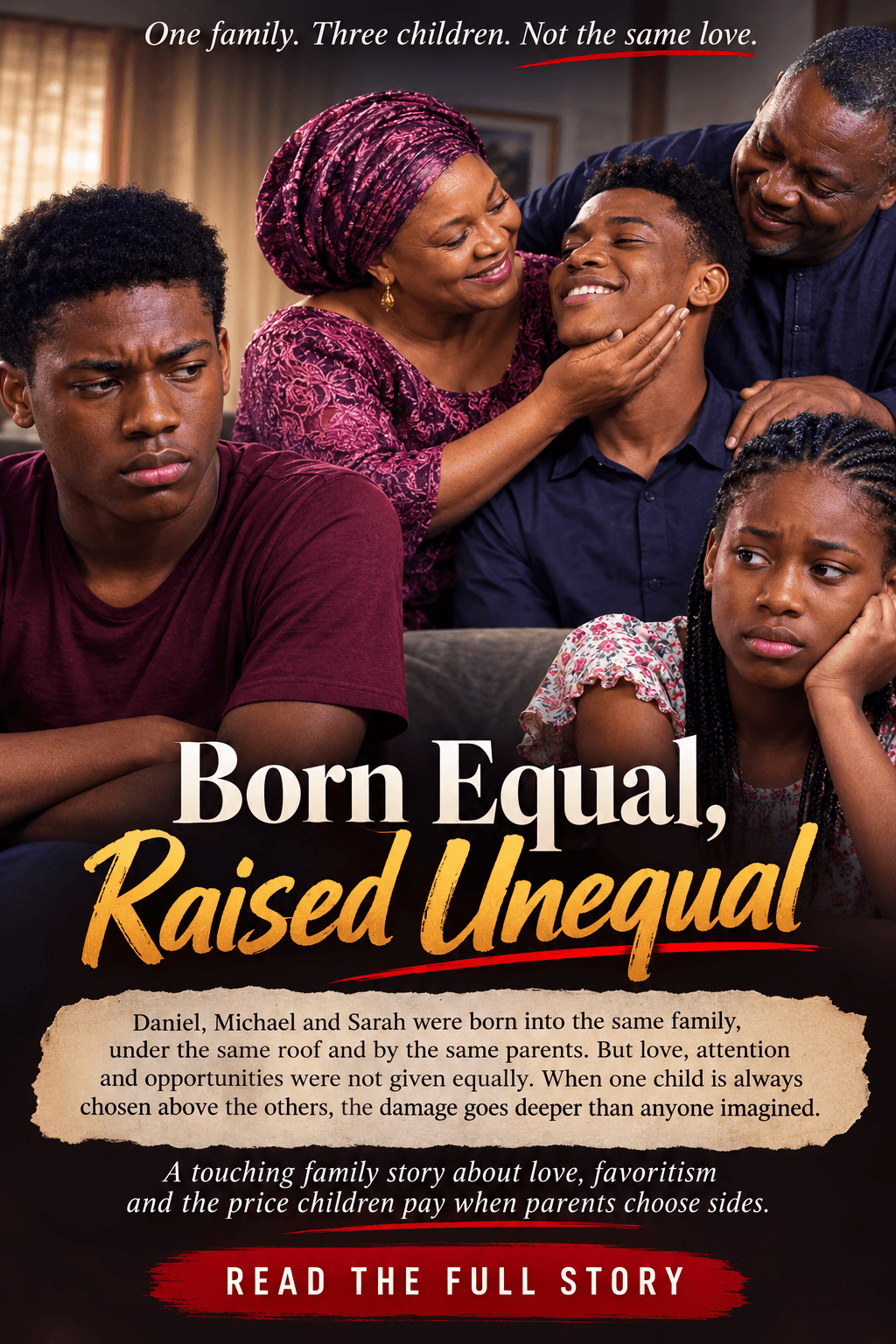
THE DAY DANIEL LEFT
“Daniel, please.”
He stopped at the gate but didn't turn around.
His mother was standing behind him.
For a moment, he thought she was going to ask him to come back inside.
Maybe she would finally say what he had wanted to hear for years.
I'm sorry.
But she didn't.
Instead, she said, “You are being unreasonable.”
Daniel closed his eyes.
That was exactly what he expected.
He adjusted the bag hanging over his shoulder and turned around.
“Unreasonable?”
His mother folded her arms.
“Yes. Your brother made a mistake. Must you make such a big issue out of everything?”
Daniel looked towards the house.
Michael was sitting comfortably in the living room, playing with his phone.
The same Michael who had just crashed their father's car.
The same Michael who had borrowed money from their mother without telling anyone.
The same Michael who somehow managed to turn every problem into somebody else's fault.
And, as usual, Daniel was the one being blamed.
He looked back at his mother.
“Mum, do you know what the problem is?”
“What?”
“It has never really been Michael.”
She stared at him.
“The problem is you.”
Her face changed.
“You have always chosen him.”
“That's not true.”
“It is.”
“You are jealous of your brother.”
Daniel laughed.
It wasn't a happy laugh.
It was the kind of laugh that came when a person had heard the same accusation so many times that it no longer had the power to hurt.
“That's what you always say.”
He shook his head.
“You know what? I am tired.”
“Tired of what?”
“Trying to convince you that I am your son too.”
His mother's expression softened for just a second.
But Daniel had already turned away.
He walked out of the gate.
He didn't know where he was going.
He didn't have a perfect plan.
He only knew that he couldn't continue living in that house.
What he didn't know was that his decision to leave would eventually force his parents and his siblings to confront something they had spent years pretending wasn't happening.
And perhaps the saddest part was that the story had not started with hatred.
It had started with love.
Just not the kind of love that every child received equally.
WHEN THEY WERE CHILDREN
Daniel was the first child.
Three years later, Michael was born.
Then came Sarah.
When Daniel was born, his parents were young and struggling. They were learning everything for the first time.
Daniel remembered his mother telling him stories about how his father would carry him around the house at night whenever he cried.
“He loved you so much,” she would say.
And Daniel believed her.
For a while, he was the center of their world.
Then Michael was born.
Something changed.
Michael had always been a sickly child.
He was constantly falling ill, and for the first few years of his life, his parents were terrified that something would happen to him.
They became extremely protective.
If Michael complained about stomach pain, his mother rushed him to the hospital.
If he cried, everyone came running.
If he wanted something, they tried their best to provide it.
Daniel understood.
He really did.
He was old enough to know that his brother was often sick.
But children don't always understand the difference between special care and special treatment.
And slowly, Michael went from being the sick child to being the child who could do no wrong.
When Michael broke Daniel's toy, their mother would say,
“Daniel, he is still young. Let him have it.”
When Daniel complained, she would add,
“You are older. You should understand.”
Daniel began hearing those words so often that they became part of his childhood.
You are older.
Let him have it.
You should understand.
Nobody seemed to notice that Daniel was also a child.
He needed someone to understand him too.
THE DIFFERENCE BECAME OBVIOUS
The first time Daniel really noticed the difference was over a school report.
He was ten years old.
He had come first in his class.
He ran home that afternoon, excited.
“Mummy!”
His mother was in the kitchen.
“Look!”
He handed her his result.
She glanced at it.
“That's good.”
Daniel waited.
That was it?
“Thank you, Mummy.”
She smiled.
“You should do even better next time.”
He nodded.
A few minutes later, Michael came running into the house.
“Mummy! Mummy!”
His mother dropped what she was doing.
“What happened?”
“I came second!”
She screamed.
“Second?”
Michael nodded proudly.
“My son!”
She hugged him.
She called their father.
She told the neighbors.
That evening, his father bought a cake.
Daniel sat at the dining table watching everyone celebrate.
He didn't say anything.
He was happy for his brother.
At least, he told himself he was.
But something had changed.
He looked at his certificate.
First position.
He folded it carefully and put it inside his schoolbag.
That night, he learned something he would never forget.
Being the best was not enough.
Not when you were not the favorite.
DANIEL BECAME THE RESPONSIBLE ONE
As the children grew older, the roles became clear.
Michael was the favorite.
Sarah was the peacekeeper.
And Daniel was the responsible one.
Whenever there was a problem, his parents called Daniel.
“Help your brother.”
“Look after your sister.”
“Don't fight with Michael.”
“You are the eldest.”
Daniel was always expected to understand.
But nobody ever asked him whether he was okay.
When Michael wanted new shoes, they bought them.
When Daniel needed new shoes, his mother would say,
“Your old ones are still fine.”
When Michael wanted money for something, he usually got it.
When Daniel asked for money, he was asked to explain exactly what he needed it for.
It wasn't one big incident that made Daniel resent his family.
It was hundreds of little things.
Things his parents probably didn't even remember.
But Daniel remembered all of them.
Children do.
They remember who clapped when they succeeded.
They remember who showed up when they were afraid.
They remember who was believed when there was an argument.
And they remember when they were constantly made to feel like they were asking for too much.
MICHAEL DIDN'T SEE THE PROBLEM
The strange thing was that Michael didn't think he was favored.
As far as he was concerned, his parents simply loved him.
He didn't understand why Daniel was becoming distant.
Whenever Daniel refused to help him, Michael complained.
“Why are you always angry with me?”
Daniel would shake his head.
“Forget it.”
“See? This is what I'm talking about.”
“What?”
“You don't like me.”
Daniel wanted to tell him everything.
He wanted to say:
It's not that I don't like you.
It's that I don't like what happens to me whenever you are around.
But he never said it.
Because he knew exactly what would happen.
Their mother would defend Michael.
Their father would tell him to stop being difficult.
So Daniel kept quiet.
And silence became a habit.
THE BOY WHO NEVER FACED CONSEQUENCES
By the time Michael became an adult, his parents had unknowingly done him a great disservice.
He had never learned to take responsibility.
Whenever he made a mistake, somebody fixed it.
Whenever he got into trouble, somebody rescued him.
Whenever Daniel tried to warn him, Michael became defensive.
“You think you are better than me.”
Daniel would sigh.
“No. I just don't want you to ruin your life.”
Michael would laugh.
“Mummy and Daddy will always have my back.”
And they did.
Until one day, they couldn't.
Michael started a business with money his father gave him.
He lost almost everything.
Daniel advised him to slow down.
Michael ignored him.
When the business eventually collapsed, he returned home.
“Daddy, I need money.”
Their father gave him some.
Then he came again.
And again.
Daniel watched helplessly.
He knew what was happening.
Their parents were still protecting Michael from the consequences of his decisions.
But this time, the consequences were too big.
THE DAY DANIEL FINALLY SPOKE
Their father's illness changed everything.
Medical bills began piling up.
Sarah contributed what she could.
Daniel paid a large part of the expenses.
Michael had little to contribute.
Yet their mother still defended him.
“He is going through a lot.”
Daniel looked at her.
“So am I.”
She became quiet.
He continued.
“I have been going through a lot for years.”
His voice cracked.
“But nobody ever asks me.”
His mother looked away.
Daniel wiped his eyes.
“You always say I am strong. Do you know how painful that is?”
Nobody answered.
“I didn't become strong because I wanted to. I became strong because I knew nobody was coming to save me.”
Sarah began crying.
Michael lowered his head.
Daniel looked at his brother.
“I don't hate you, Michael.”
Michael looked up.
“But I hate what this family has become.”
TOO LATE TO CHANGE THE PAST
Their mother eventually became seriously ill.
As she lay in the hospital, the three siblings sat around her.
Michael was holding her hand.
Sarah was crying.
Daniel stood near the window.
Their mother opened her eyes.
“Daniel.”
He turned.
She motioned for him to come closer.
He hesitated before walking to the bed.
She reached for his hand.
“I wasn't fair to you.”
Daniel said nothing.
“I thought I was protecting Michael.”
She swallowed.
“I didn't realize I was hurting you.”
Daniel's eyes filled with tears.
“You didn't just hurt me, Mum.”
He looked at Michael.
“You hurt him too.”
Michael began to cry.
Their mother closed her eyes.
For the first time, she understood that favoritism had not produced a winner.
There was no winner.
Daniel had grown up feeling unwanted.
Michael had grown up feeling entitled.
Sarah had spent years trying to keep everyone together.
And their parents were left wondering how three children they had loved so much had grown so far apart.
BORN EQUAL, RAISED UNEQUAL
After their mother's death, the siblings slowly began rebuilding their relationship.
It wasn't easy.
There were too many years of hurt.
Too many things left unsaid.
Too many memories that could not simply be erased.
But they tried.
Because eventually they understood something their parents had never understood.
Children don't have to receive exactly the same things.
One child may need more attention.
Another may need more discipline.
Another may need more financial support at a particular time.
But every child needs to know that they are equally valued.
Daniel never wanted his parents' money.
He wanted their approval.
Michael never wanted to be hated by his siblings.
He simply didn't realize how his parents' treatment of him had affected them.
Sarah never wanted to be the person holding the family together.
She just didn't know what else to do.
They were all victims in different ways.
And that was the tragedy.
Their parents thought they were raising their children.
But without realizing it, they were also shaping the wounds those children would carry into adulthood.
Daniel became independent because he learned not to expect anyone.
Michael became entitled because he learned that someone would always rescue him.
Sarah became a people-pleaser because she learned that keeping everyone happy was the only way to keep the family together.
Three children.
One home.
One set of parents.
Three completely different childhoods.
They were born equal.
But they were raised unequal.
And sometimes, the greatest damage parents do to their children isn't the punishment they give them.
It is the love they give one child at the expense of another.