 Writers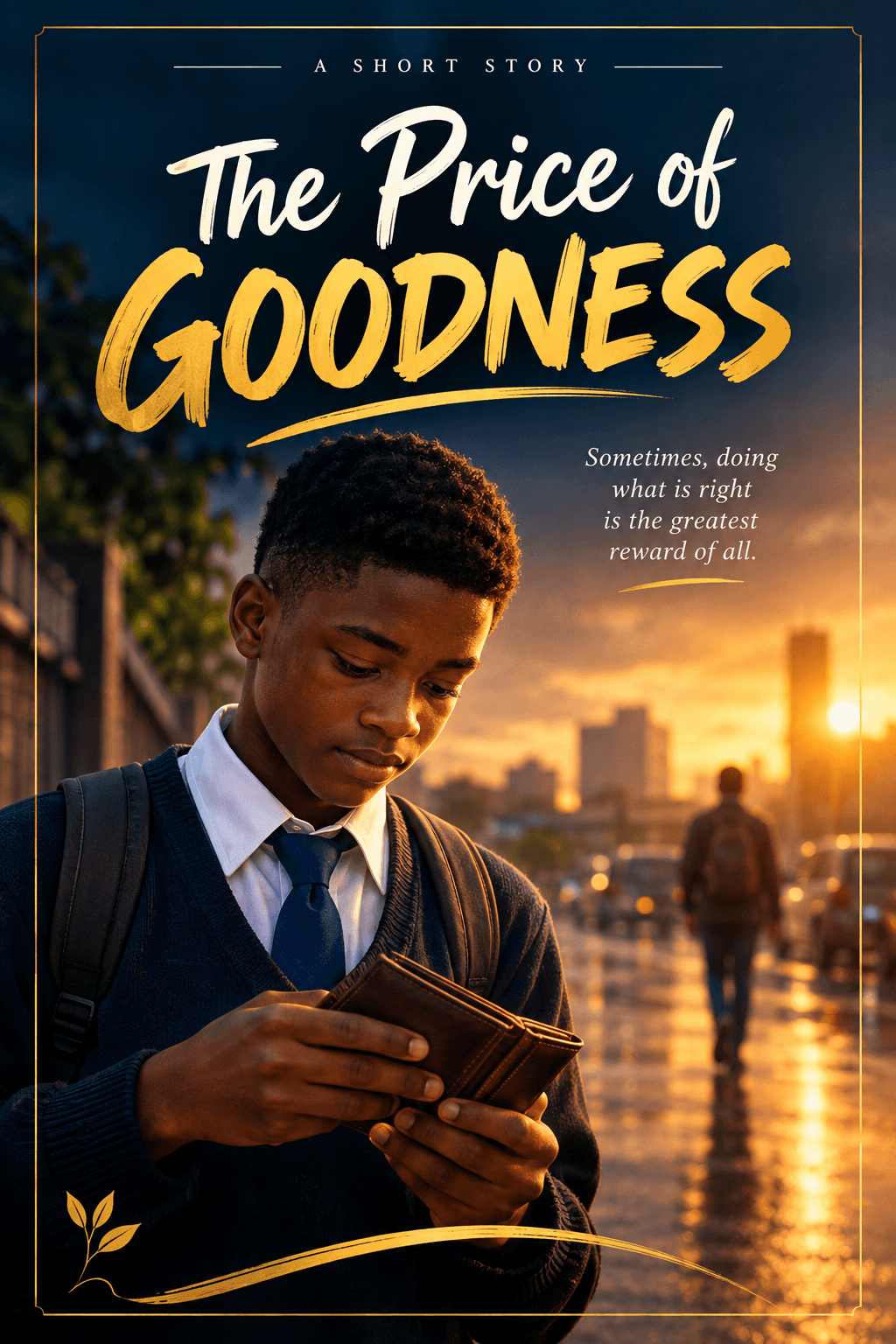
The first thing I noticed was the envelope.
It lay beside the muddy roadside, half-covered by leaves and soaked by the evening rain. I stopped, looked around, and picked it up.
There was no name on the outside.
I opened it.
My heart froze.
Inside was a thick bundle of money.
For a moment, the noise of the rain disappeared. All I could hear was my own breathing. My mother's voice immediately came to mind: “Never take what does not belong to you.”
But that evening, those words sounded difficult to obey.
My school fees were overdue. My mother had been struggling to pay my younger sister's hospital bills, and our landlord had already warned us about the rent. The money in my hands could solve almost every problem in our house.
I could walk away.
Nobody had seen me.
I slipped the envelope into my schoolbag and continued home.
That night, I could not sleep.
The envelope sat beneath my pillow like a stone. Every time I closed my eyes, I imagined the relief on my mother's face if I brought the money home.
Then another thought came.
“What if someone needs this money more than I do?”
I got out of bed.
By morning, I had made my decision.
I returned to the place where I had found the envelope and began asking questions. After nearly an hour, an elderly man came running down the street.
“Please!” he cried. “Has anyone found an envelope?”
His eyes were filled with fear.
I asked him to describe it.
He mentioned the exact amount inside.
I handed it to him.
He opened it with trembling hands. When he realized that nothing was missing, tears rolled down his cheeks.
“That money is for my wife's surgery,” he whispered.
I stood silently.
Suddenly, I understood what I had almost done.
I had almost turned another person's desperation into my comfort.
The old man held my hands and thanked me repeatedly. He offered me some money as a reward, but I politely refused.
When I told my classmates about what had happened, they laughed.
“You are foolish,” one of them said. “You could have solved your family's problems.”
His words hurt.
For several days, I wondered whether I had made the right choice. Goodness had cost me an opportunity. It had cost me money I desperately needed. It had even made me look foolish in the eyes of people around me.
Then, one afternoon, my mother called me outside.
A stranger was waiting at our gate.
It was the elderly man.
He had come to tell my mother what I had done. He also knew about my school fees because, while preparing for his wife's surgery, he had spoken to the school administrator.
“I cannot repay your son for what he did,” he said. “But I can help him continue his education.”
He paid my outstanding school fees.
That day, I finally understood the true price of goodness.
Sometimes goodness costs us what we desperately want.
Sometimes it makes us stand alone.
Sometimes people laugh at us for choosing the harder path.
But goodness is never truly expensive.
Dishonesty may give you something today, but goodness gives you something greater: a character that no amount of money can buy.
And from that day forward, whenever I faced a difficult choice, I remembered the envelope in the rain—and the price I was willing to pay to remain good.